

Saltwater vs. Chlorine Pools: Which Is Better for Houston Homes?
Quick Answer
There isn't one system that's right for every homeowner.
Saltwater pools are often attractive to homeowners who want softer-feeling water and less routine handling of chlorine products. Traditional chlorine pools can offer a simpler system with a lower initial equipment cost and straightforward control over chlorine levels.
Your choice can depend on your budget, equipment, maintenance preferences, pool design, and how you plan to use the pool.
When Artistic Pools designs a custom swimming pool, these decisions can be considered as part of the overall pool design rather than as an afterthought.Pools: Which Is Better for Houston Homes?

How Does a Saltwater Pool Work?
A common misconception is that saltwater pools don't use chlorine.
They do.
The difference is that instead of regularly adding chlorine directly to the water, a salt chlorine generator uses electrolysis to convert chloride from dissolved pool salt into chlorine.
The salt concentration is also far below that of ocean water, so swimming in a residential saltwater pool isn't the same experience as swimming at the beach.
Advantages of a Saltwater Pool
For many homeowners, the appeal comes down to the swimming experience and routine upkeep.
Potential benefits include:
Softer-feeling water
Less frequent handling and addition of chlorine products
More consistent chlorine production when the system is operating properly
Less of the strong “chlorine pool” experience people sometimes associate with poorly balanced water
Convenient everyday sanitation
That combination can make saltwater appealing for families who expect to use their pool frequently.
What Should You Consider Before Choosing Saltwater?
Saltwater systems aren't maintenance-free.
Water chemistry still needs to be tested and balanced, and the salt cell itself eventually requires cleaning and replacement.
Salt can also be corrosive to certain materials and equipment when the pool isn't properly designed or maintained.
That's one reason the decision should be considered alongside the pool's equipment, finishes, surrounding materials, and long-term maintenance plan.
There is also an additional upfront cost for the salt chlorine generator.
How Does a Chlorine Pool Work?
A traditional chlorine pool sanitizes the water by adding chlorine rather than generating it from salt.
Chlorine can be introduced in several forms depending on the pool and maintenance approach. Regardless of the method, the goal is the same: maintain an appropriate sanitizer level while keeping the overall water chemistry balanced.
Regular testing and proper chemical balance help keep the water clean, clear, and comfortable for swimmers.
Advantages of a Chlorine Pool
Traditional chlorine remains popular for good reasons.
Benefits can include:
Lower initial equipment costs compared with adding a salt generator
A familiar and widely understood sanitation method
Straightforward adjustments to chlorine levels
No salt cell to maintain or eventually replace
Compatibility with a wide range of pool configurations
For homeowners comfortable with routine pool maintenance—or those using a professional pool service—a traditional chlorine system can be a practical choice.
What Should You Consider With Chlorine?
Traditional chlorine pools generally require more direct management of sanitizer.
Depending on usage, weather, water chemistry, and other conditions, chlorine levels may need to be adjusted regularly.
Properly balanced pool water shouldn't simply be judged by whether it “smells like chlorine.” Strong odors and irritation can be associated with chloramines and improperly balanced water rather than proof that a pool contains too much free chlorine.
Regardless of sanitation system, good water chemistry matters.
Saltwater vs. Chlorine: What's the Difference?
Here's a simple comparison:
| Saltwater Pool | Chlorine Pool | |
|---|---|---|
| Sanitizer | Generated from salt | Added directly |
| Water Feel | Often feels softer | Traditional pool feel |
| Upfront Cost | Generally higher | Generally lower |
| Chlorine Handling | Less frequent | More frequent |
| Equipment | Salt generator required | No salt generator |
| Maintenance | Water chemistry + salt cell | Water chemistry + chlorine |
Neither option eliminates pool maintenance.
The better question is usually not “Which system is best?” but “Which system better fits how I want to own and maintain my pool?”
Does Houston's Climate Affect the Decision?
Yes. Houston's climate is an important consideration for any pool sanitation system.
Our long, hot swimming season can mean extended periods of pool use. Warm temperatures, sunlight, rain, debris, and heavy swimmer loads can all affect water chemistry and sanitizer demand.
That makes properly sized equipment and consistent water maintenance particularly important.
For a homeowner building a custom pool, the sanitation system shouldn't be considered independently from the rest of the project. Pool volume, equipment, circulation, features, usage, and maintenance expectations all work together.
That's one benefit of discussing these decisions during the pool design and construction process.
What About Spas, Water Features, and Luxury Pool Designs?
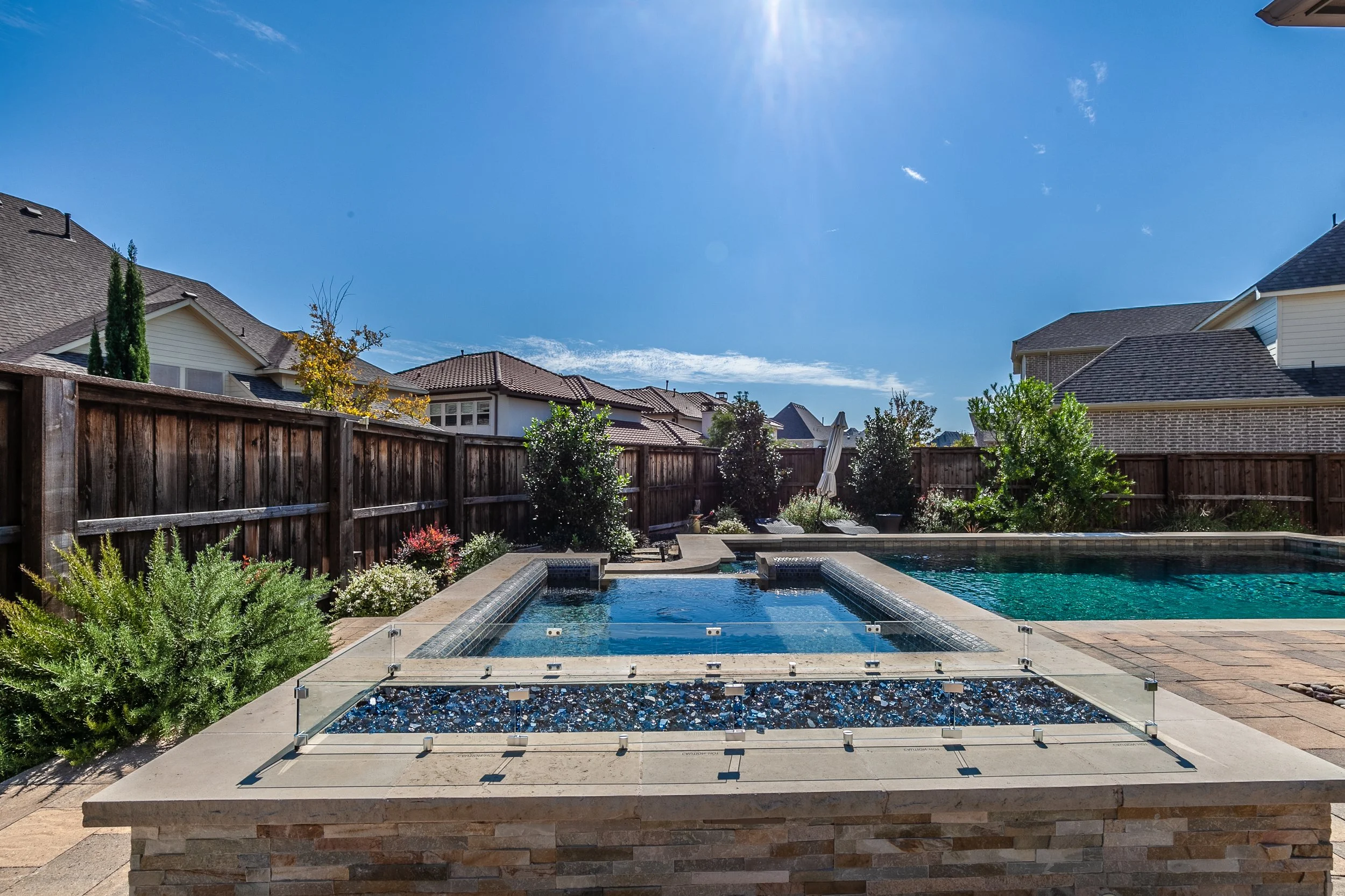
Your sanitation system is only one part of designing a custom pool.
Homeowners may also be considering an integrated spa, tanning ledge, waterfalls, lighting, custom finishes, outdoor entertaining areas, or other features.
The pool's mechanical systems need to support the finished design.
For example, adding an integrated pool and spa creates different equipment and operating considerations than building a simple swimming pool. Water features and other additions can also influence circulation and overall system design.
Artistic Pools approaches these decisions as part of the entire backyard rather than treating every component separately.
Explore our project gallery to see examples of completed pools, spas, water features, and outdoor living spaces.
What Does Artistic Pools Recommend?
Our approach is to start with how you want to use and maintain your pool.
Some homeowners specifically want saltwater because they've enjoyed swimming in saltwater pools before. Others prefer a traditional chlorine system because it's familiar and straightforward.
Neither preference automatically makes one pool better than another.
When planning your pool, it's worth considering:
How frequently your family will swim
How involved you want to be with routine maintenance
Your equipment budget
The pool and spa features you're considering
Your preferred finishes and surrounding materials
Your expectations for long-term ownership
Those conversations are part of creating a pool around the homeowner instead of forcing every homeowner into the same design or equipment package.
Frequently Asked Questions About Saltwater vs. Chlorine Pools
-
Yes. A saltwater pool uses a salt chlorine generator to produce chlorine from dissolved salt. It isn't a chlorine-free swimming pool.
-
No. Residential saltwater pools typically operate at a much lower salt concentration than seawater, so they shouldn't feel like swimming in the ocean.
-
No. Saltwater pools still require regular water testing and chemical balancing. The salt chlorine generator and cell also require maintenance.
-
A saltwater system generally has a higher upfront equipment cost because of the chlorine generator. Long-term costs vary based on equipment, maintenance, chemical use, and eventual cell replacement.
-
Many swimmers describe properly maintained saltwater pools as having softer-feeling water. However, comfort also depends heavily on proper water chemistry. Either type of pool can cause irritation if the water isn't correctly balanced.
-
Many pools can be converted, but compatibility with existing equipment and materials should be evaluated first. If you're considering larger improvements at the same time, explore Artistic Pools' pool remodeling services.
-
Either can work well in Houston when the pool is properly designed and maintained. The right choice depends more on the homeowner's maintenance preferences, budget, equipment, and overall pool design than on location alone.
Key Takeaways
Saltwater and traditional chlorine pools use chlorine to sanitize the water—the primary difference is how that chlorine is delivered.
Saltwater systems can offer softer-feeling water and reduce the need to manually add chlorine, but they require additional equipment and salt-cell maintenance. Traditional chlorine systems generally cost less upfront and are straightforward to operate, but require more direct chlorine management.
For Houston homeowners, either system can be a good fit when it's properly designed for the pool.